If you run a commercial premises in London, fire safety is not a box-ticking job. It is about protecting your staff, customers and stock if the worst happens.
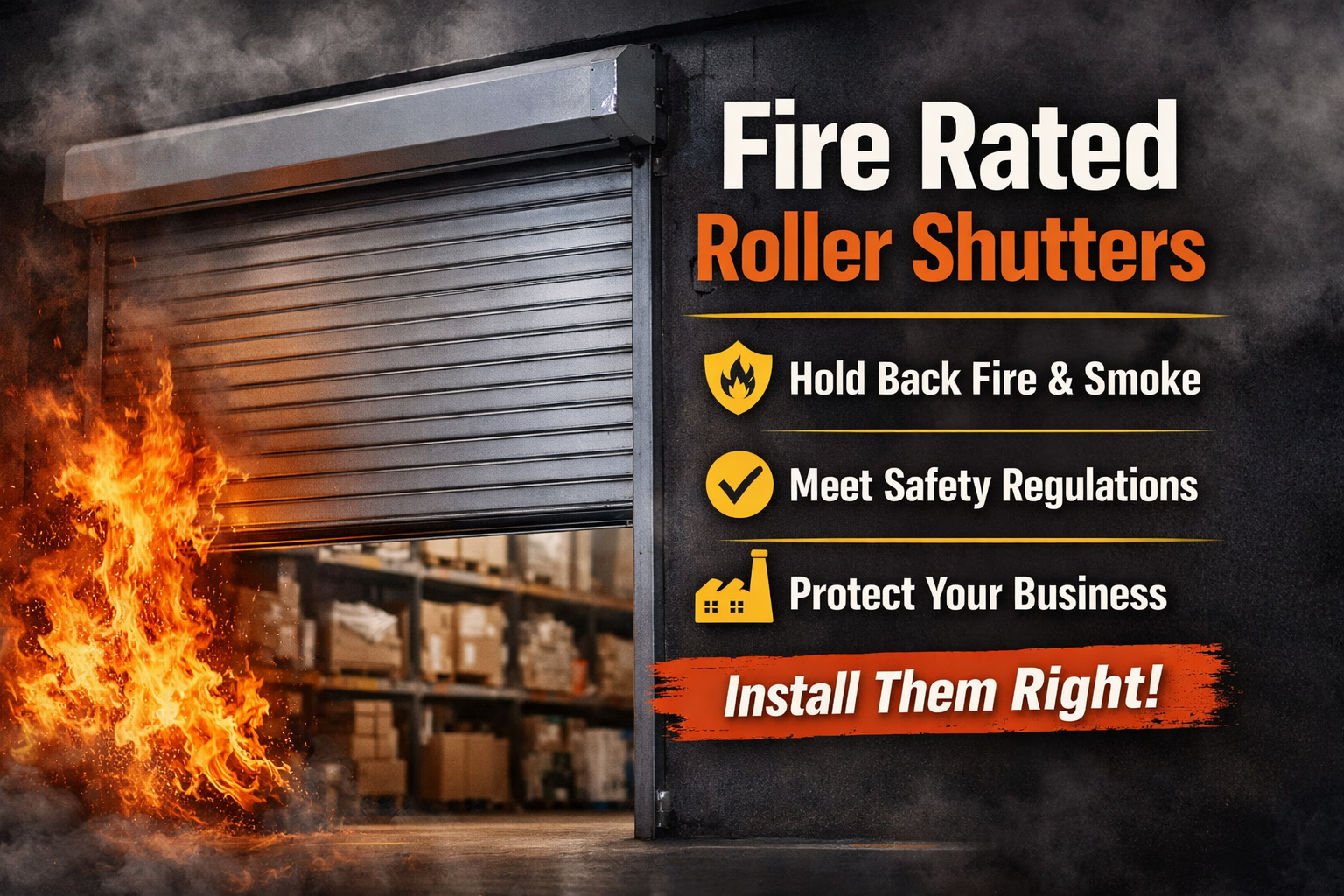
Fire rated roller shutters play a key part in that plan. They are built to hold back fire and smoke for a set time, giving people a safe way out and limiting damage.
I have installed and repaired these across shops, warehouses, schools and factories. The right shutter and the right fitting method make all the difference.
What Is a Fire Rated Roller Shutter?
A fire rated roller shutter is a steel shutter tested to resist fire for 60, 120 or even 240 minutes. When triggered by a fire alarm or heat sensor, it drops down and seals the opening.
It creates a fire compartment. That slows the spread of flames and smoke from one section of a building to another.
They are not the same as standard security shutters. The materials, guides, seals and control systems are all designed for heat resistance and controlled descent.
Where Fire Rated Shutters Are Commonly Used
We fit them in places where fire risk is higher or where building regulations demand fire separation.
- Commercial kitchens
- Shopping centres and retail units
- Warehouses and storage facilities
- Underground car parks
- Factories and workshops
- Schools and hospitals
In many of these sites, a fire shutter is part of the fire strategy agreed with Building Control and insurers.
Fire Ratings and Compliance
Fire shutters are tested under set standards. In the UK you will often see ratings like 60, 120 or 240 minutes.
The rating tells you how long the shutter can resist fire under test conditions. Always check the certification and match it to the building’s fire plan.
If you guess or cut corners here, you risk failed inspections and serious legal issues.
Main Types of Installation Methods
The shutter itself is only part of the job. How it is fitted matters just as much.
Different buildings call for different installation methods. Let’s break down the main types.
1. Surface Mounted Installation
This is one of the most common methods. The shutter box and guides are fixed directly onto the face of the wall around the opening.
It is often used in existing buildings where you do not want major structural changes. The work is quicker and usually more cost effective.
This method suits brick, concrete and steel frames. It does mean the box is visible, so it is more about function than clean lines.
2. Built-In Installation
In a built-in setup, the shutter box is recessed into the wall or structural opening. You often plan for this during new construction or a big refurb.
The result is a neater look. The box is hidden, and the guides sit within the structure.
It takes more planning and accurate measurements. If the opening is wrong, you cannot just hide it later.
3. Face Fixed Installation
Face fixing is similar to surface mounting but focused on the external face of the opening. The guides run down the sides, and the box sits above the opening.
This method is common for shop fronts and loading bays. It works well when you need solid fire separation on an outside wall.
It is also easier for future access when the shutter needs servicing or repair.
4. Reveal Fixed Installation
With reveal fixing, the guides and shutter sit inside the depth of the opening. The system is tucked within the reveal.
This is common for internal fire compartments, such as corridors or internal warehouse separations.
It offers a cleaner finish and extra protection from knocks. The wall itself helps shield the components.
5. Ceiling Mounted Installation
Ceiling mounting is used where wall space is limited or when dealing with very wide openings. The shutter rolls down from above.
It is common in large industrial units and car park entrances. When open, it stays out of the way and allows full clearance.
This method needs strong ceiling support. The weight of a fire rated shutter is not small, so structure checks are vital.
Choosing the Right Method for Your Building
There is no one-size-fits-all answer. The choice depends on the building layout, fire strategy and daily use.
Ask yourself a few key questions.
- Is it a new build or retrofit?
- Internal or external opening?
- How much space is available above the opening?
- Do aesthetics matter?
- What fire rating is required?
An experienced installer will visit site, measure properly and advise. Guesswork leads to misaligned guides, poor sealing and compliance problems.
Automatic Operation and Fire Activation
Most fire rated roller shutters are linked to the fire alarm system. When the alarm triggers, the shutter closes automatically.
Some systems use a controlled descent with battery backup. This ensures the shutter will close even if power fails.
Testing the link between the shutter and the fire alarm is not optional. It must be part of your regular maintenance schedule.
Common Mistakes We See
Over the years, I have seen the same problems repeat.
- Shutters installed without full fire alarm integration
- Incorrect fire rating for the building requirement
- Poorly aligned guides that stick under pressure
- No regular servicing or drop testing
A fire shutter that does not close fully is worse than no shutter at all. It gives a false sense of security.
Maintenance and Legal Responsibility
Fire shutters must be inspected at set intervals. This is often required by insurers and fire risk assessments.
A standard service usually includes checking:
- Motor and control panel
- Fuse or link system
- Guides and bottom bar
- Automatic drop function
- Integration with fire alarm
If a fault shows up, fix it straight away. Do not wait for the next annual check.
Fire Rated Shutters vs Security Shutters
Many people assume one shutter does everything. That is not always true.
A fire rated shutter is tested for heat resistance and containment. A security shutter is focused on forced entry resistance.
Some systems combine both, but you must confirm this. Always check the specification before ordering.
Cost Considerations
Fire rated shutters cost more than standard roller shutters. The heavier construction and certified components add to the price.
The installation method also affects cost. Built-in and ceiling-mounted systems often require more labour and structural adjustments.
Do not make your decision on price alone. In a fire, performance matters more than saving a few hundred pounds.
Final Thoughts
Fire rated roller shutters are a serious piece of safety equipment. The type you choose and how it is installed will impact the effectiveness of your whole fire strategy.
From surface mounted to ceiling mounted systems, each method has its place. The right choice depends on your building and how it is used every day.
If you are planning a new installation or need to upgrade existing fire shutters in London, get proper advice before you commit.
Speak to a shutter professional who installs and maintains fire rated roller shutters daily. Book a site survey, get clear guidance, and make sure your premises is fully protected and compliant.