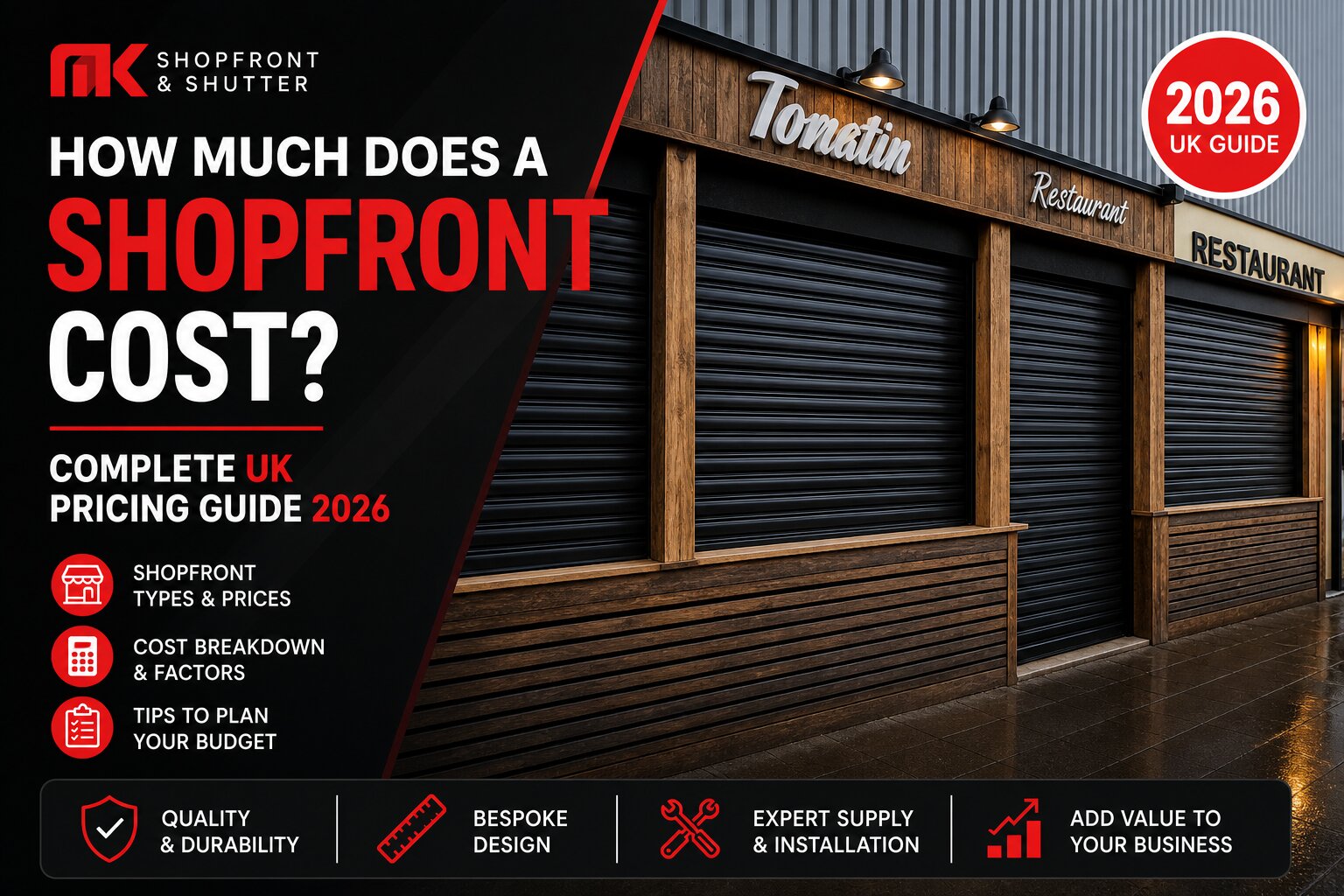
A new shopfront in the UK typically costs between £1,900 and £12,700+, depending on materials, size, and added features. Aluminium is the most popular and cost-effective option at roughly £3,500 for a standard unit. Toughened glass fronts start around £4,200, while timber can reach £10,000+. Key cost drivers include frontage width, glass specification, door type, and whether you add roller shutters. Get in touch with our team for an accurate quote based on your premises.
Planning a new shopfront is one of the most important investments a business owner can make. Your frontage is the first thing customers see. It shapes their impression before they step inside. But when you start researching shopfront cost, you’ll quickly find a wide range of figures with very little explanation behind them.
This guide breaks down exactly what drives shopfront installation prices in the UK, provides clear cost ranges by material type, and explains what to expect at every stage of the project. Whether you’re fitting out a new unit or replacing a tired old frame, you’ll find the information you need here.
Section 01
How Much Does a Shopfront Cost in the UK?
A standard shopfront installation in the UK costs between £1,900 and £12,700+. Most small to medium retail units pay between £3,500 and £6,500 all-in. The final figure depends on frontage size, material choice, glass specification, and any added features like automatic doors or integrated roller shutters.
Industry data from London shopfront installers places entry-level aluminium installations for smaller frontages at around £1,900, while large commercial fronts with bespoke glazing can exceed £12,700. Most businesses fall somewhere in the middle.
Medium: ~£4,200
Large: ~£7,350
Medium: ~£5,400
Large: ~£9,450
Medium: ~£6,240
Large: ~£10,920
These are indicative figures. Prices include professional installation and VAT. For an accurate quote based on your premises, speak to our team at MK Shopfront & Shutters.
Section 02
What Factors Affect Shopfront Installation Costs?
The four biggest cost drivers are: material choice (roughly 40% of total cost), frontage size (35%), additional features such as automatic doors or shutters (15%), and installation complexity (10%). Understanding these factors helps you plan a realistic budget before requesting quotes.
Our guide on 10 key factors affecting shopfront installation costs covers this in full, but the table below summarises what to expect.
| Cost Factor | Impact Level | What to Expect |
|---|---|---|
| Material type | High | Aluminium is the most cost-effective. Timber adds a significant premium. Glass fronts sit in the middle. |
| Frontage size | High | More glass panels and wider frames require more materials and more installation time. |
| Glass specification | Medium–High | Upgrading from standard toughened to laminated or double-glazed units adds £500–£1,500+ depending on size. |
| Door type | Medium | Manual swing doors are the lowest cost. Automatic sliding or bi-folding doors add £1,500–£4,000+. |
| Roller shutter integration | Medium | Installing a shutter at the same time as the shopfront can save up to 15% on labour costs. |
| Location and access | Low–Medium | Central London sites with restricted parking or overnight work requirements typically carry a small premium. |
| Removal and disposal | Low | Removing an existing frame and disposing of old materials adds £200–£600 to most projects. |
Section 03
Aluminium vs Glass vs Timber: Which Is Right for Your Business?
Each material has a different balance of upfront cost, long-term maintenance, and visual impact. Here is a direct comparison to help you decide.
If you are comparing your options, our detailed article on aluminium vs glass shopfronts covers the full picture. For most businesses, aluminium shopfront installation delivers the best combination of value, security, and durability.
Timber is a premium choice suited to heritage properties, conservation areas, and businesses that require a traditional aesthetic. Specialist installations for listed buildings or heritage facades can reach £13,000+ where bespoke detailing is required.
Section 04
Additional Features That Add to the Overall Cost
The frame and glazing are only part of the picture. Several additional features are commonly added during a shopfront installation, and each carries its own cost.
- Double glazing or Low-E glass: Adding energy-efficient double-glazed units to a standard aluminium front typically adds £500–£1,500 to the total cost. It reduces heating bills and improves thermal performance.
- Laminated security glass: Laminated glass costs roughly 20% more than toughened glass but stays in place if broken, significantly slowing a break-in. Businesses in higher-risk areas often consider it a worthwhile investment.
- Automatic doors: Automatic door installation adds £1,500–£4,000+ depending on the type. Automatic sliding doors are increasingly common in retail, hospitality, and healthcare settings.
- Roller shutter integration: Installing a roller shutter at the same time as your shopfront saves up to 15% on labour costs. Manual shutters start around £800, while motorised systems typically begin at £1,200.
- Signage and branding: Illuminated signage requires separate advertisement consent. Budget an additional £300–£1,500 for a professionally designed and installed fascia sign.
- Removal of existing shopfront: If you are replacing an old frame, expect to add £200–£600 for removal, disposal, and making good the surrounding masonry.
Section 05
Do You Need Planning Permission for a New Shopfront?
Yes, in most cases. Any alteration that materially changes the external appearance of your premises requires full planning permission from your local council. This includes replacing a shopfront frame, changing doors, or installing external security measures. Minor like-for-like replacements may not require permission, but you should always confirm with your local planning authority before starting work.
UK planning rules are clear: replacing or significantly altering a shopfront triggers a requirement for full planning permission. If your premises is a listed building, you also need listed building consent for any internal or external changes.
Businesses in conservation areas face additional restrictions. Local authorities expect materials and designs that are sympathetic to the surrounding streetscape. Modern materials such as uPVC are frequently refused in these settings.
Illuminated signage requires a separate Advertisement Consent application, regardless of whether your shopfront itself needs planning permission. Most planning applications for shopfronts are processed within 8 to 12 weeks, so factor this into your project timeline.
Our team can advise on what permissions may apply to your premises. You can also find full guidance on the Planning Portal.
Section 06
How to Keep Your Shopfront Costs Under Control
Cost-Saving Tips from Our Installation Team
- Get at least three itemised quotes. Ensure each quote includes removal, disposal, glass, installation, and making good.
- Bundle your roller shutter installation with the shopfront job. Combined labour can save up to 15%.
- Choose aluminium for the best long-term value. It requires minimal maintenance and lasts 20+ years.
- Keep the design simple. Straight lines and fewer glass panels reduce fabrication time and lower overall costs.
- Apply for planning permission early. An 8-to-12-week processing window can delay your project if you leave it late.
- Confirm what is included in each quote. Removal, VAT, and making good are often excluded by lower-cost competitors.
If you are unsure whether your shopfront needs replacing or just maintaining, our blog on when to replace old shutters instead of repairing covers the key decision points. Before starting any installation, it is also worth reading our shopfront installation checklist to make sure your site is ready.
Section 07
Getting an Accurate Quote for Your Shopfront
Online cost calculators and guides are useful for initial budgeting, but every shopfront project is unique. Frontage dimensions, access conditions, glass specification, and the condition of the surrounding structure all affect the final price.
The most reliable approach is to request an itemised quote that clearly lists: glass spec, frame system, door and hardware, installation, removal and disposal, and making good of the perimeter. If those line items are missing from a quote, the final bill often grows once work begins.
At MK Shopfront & Shutters, we carry out free site surveys across London and the surrounding area. Our experienced engineers assess your premises, discuss your requirements, and provide a transparent, itemised quote with no hidden costs. We also handle toughened glass shopfront installation, aluminium glass door installation, and commercial glass replacement across all property types.
Get a Free Shopfront Quote Today
No obligation. Site surveys available across London. Transparent, itemised pricing.
FAQ
Frequently Asked Questions