Roller shutters get used hard. Day in, day out, they open, close, take knocks, deal with weather and sometimes abuse.
If you don’t stay on top of maintenance, they will fail. And when they fail, it’s never at a good time.
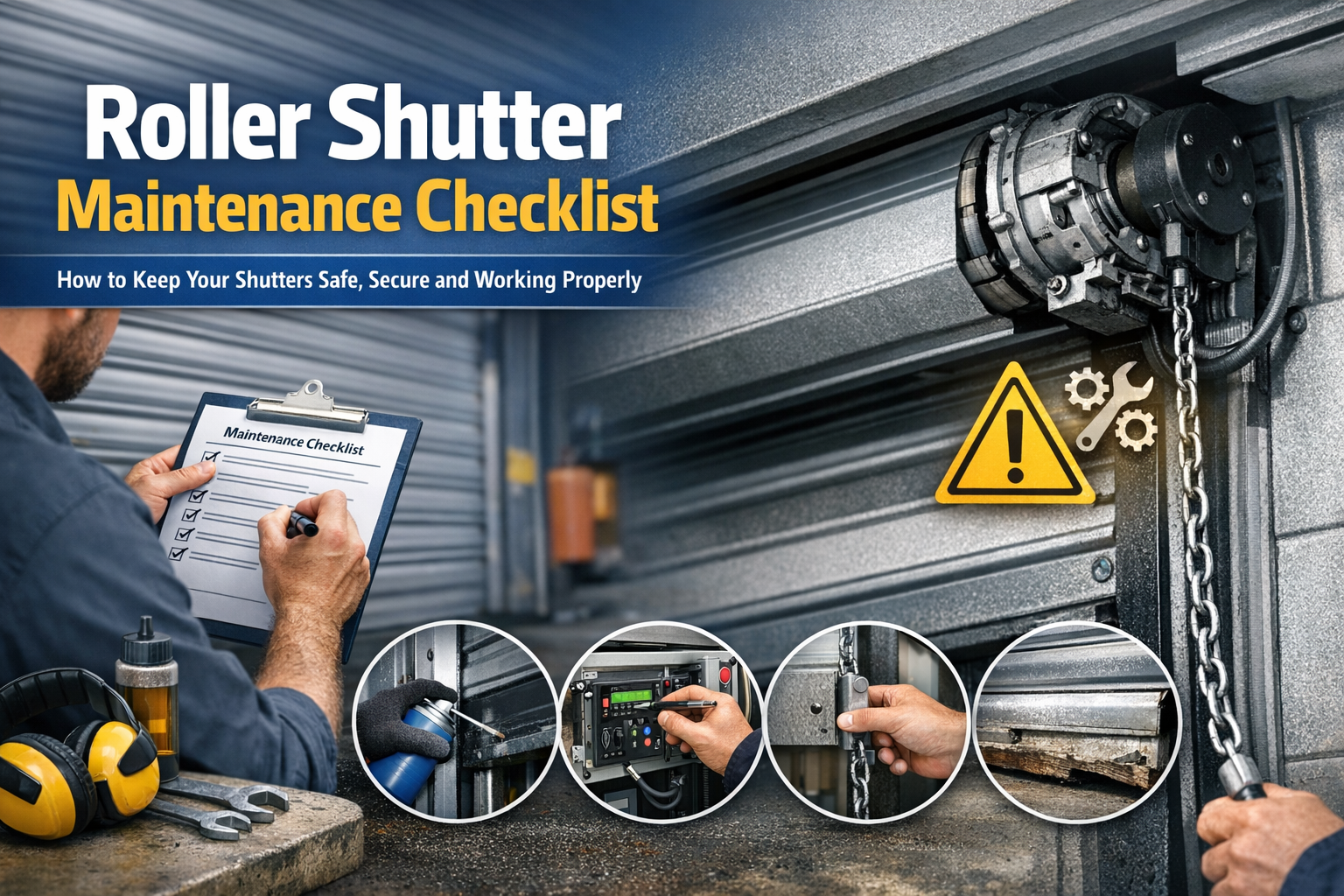
This guide gives you a clear, practical roller shutter maintenance checklist. It’s based on what we see on real jobs across London and the South East.
Key Takeaways
- Roller shutters should be serviced at least once a year, more often in busy sites.
- Small issues like dirt in the guides or lack of grease cause big failures over time.
- Electric shutters need extra checks on motors, safety edges and controls.
- Grinding noise, uneven movement or slow operation are early warning signs.
- Regular maintenance protects staff safety and keeps you compliant.
- Professional servicing catches faults you won’t see during basic checks.
Why Roller Shutter Maintenance Matters
Your shutter is not just a metal door. It is a moving machine with springs, bearings, motors and safety systems.
When parts wear out or dry up, the strain moves elsewhere. That’s how a cheap fix becomes a full motor replacement.
Poor maintenance also creates risk. A shutter that drops, jams or fails to stop can injure someone.
If you run a shop, warehouse or unit, you have a duty of care. Regular inspection is part of that.
How Often Should You Service Roller Shutters?
For most commercial sites, we recommend a full service once a year. That’s the bare minimum.
If the shutter is used heavily, like a warehouse shutter opening 20 times a day, it should be checked every six months.
High speed doors and electric shutters may need more frequent checks. The more it moves, the more it wears.
Basic Roller Shutter Maintenance Checklist
These are the checks you or your site manager can do between professional services.
1. Check the Shutter Curtain and Slats
Look along the front of the shutter when it is closed. Check for dents, cracks or bent slats.
Damaged slats can catch in the guides. That can twist the curtain and strain the motor.
If a slat is badly bent, get it replaced early. Waiting makes it worse.
2. Inspect the Guide Channels
The guides down each side collect dirt fast. Especially on shopfront shutters facing the street.
Clear out rubbish, leaves and loose debris. Even small stones can cause shutters to jam.
Check that the guides are straight and firmly fixed to the wall.
3. Listen to the Motor
Operate the shutter and listen carefully. A smooth, steady sound is what you want.
Grinding, clicking or labouring noises mean something is wrong. Motors don’t fix themselves.
If it sounds strained, stop using it and get it checked.
4. Test All Controls
Try the wall switch, key switch or remote. Make sure all controls respond quickly.
If there’s a delay or it only works sometimes, don’t ignore it.
Electrical faults often start small.
5. Test the Manual Override
Every electric roller shutter should have a manual override. Usually a chain or crank handle.
Test it while power is off. Make sure it works and is easy to access.
In a power cut, you need it to function.
6. Lubricate Moving Parts
Lightly grease bearings, springs and hinge points. Use a proper lubricant, not WD40 alone.
Do not soak the guides. Over-greasing attracts dirt.
Dry mechanisms wear out fast. Controlled lubrication extends life.
7. Check Balance
For manual shutters, the door should not feel heavy or drop suddenly.
If it slams down or feels awkward to lift, the spring tension may be off.
Spring repairs should always be done by professionals. They carry high tension.
8. Inspect Locks and Security
Check ground locks and central locks. Make sure they engage fully.
If a lock sticks, service it. A shutter is only as secure as its locking point.
9. Test Safety Devices
Electric shutters often have safety edges or photo cells. These protect people from injury.
Place an object in the path when closing. The door should stop or reverse.
If it doesn’t, stop using it and call for service immediately.
Common Signs Your Roller Shutter Needs Repair
Here are early warning signs we see all the time on call-outs.
- Shutter opens slower than normal.
- It stops halfway and struggles.
- It shakes or shudders while moving.
- There are gaps at the bottom when closed.
- You notice fresh rust around joints.
Don’t wait for a breakdown. These are the red flags.
Electric vs Manual Roller Shutter Maintenance
Manual shutters are simpler but still need checks. Springs and locks wear out over time.
Electric shutters have motors, control panels and safety systems. That means more parts to inspect.
Motor units need correct power supply and limit settings. If limits drift, the door may over-travel.
Over-travel strains the barrel and curtain. That leads to expensive repairs.
Electric shutters always need professional servicing at proper intervals.
The Legal Side of Roller Shutter Maintenance
If you operate powered shutters in a workplace, you must maintain them safely.
You should carry out regular inspections and keep records of servicing.
If an accident happens and there is no maintenance history, you may face serious liability.
Routine servicing protects you legally as well as mechanically.
What a Professional Roller Shutter Service Includes
When we service a shutter properly, we don’t just spray it and leave.
We strip and check bearings and end plates.
We test motor torque and set limits correctly.
We check spring tension and balance.
We inspect the barrel, shaft and fixings.
We test all safety features to current standards.
It’s a full mechanical and safety review, not a quick look.
Maintenance for Shopfront Roller Shutters
Shop shutters face added risk from weather and street damage.
Salt, rain and road dust speed up corrosion. Clean them more often.
Paint chips should be treated early to stop rust spreading.
Visual appearance also matters for retail. A damaged shutter affects brand image.
Maintenance for Industrial Roller Shutters
Warehouse and factory shutters work harder and lift heavier loads.
Forklift impacts are common. Check guides and bottom rails for bends.
High cycle usage means bearings and springs wear faster.
A preventative service plan is strongly recommended.
Preventive Maintenance Saves Money
An emergency repair costs more than a planned service. Every time.
Motor replacements are far more expensive than early bearing changes.
Downtime also costs. If your shutter won’t open, you can’t trade.
Preventive maintenance protects your budget.
Keep Records of Roller Shutter Servicing
Log every inspection and service visit.
Record dates, findings and parts replaced.
This helps spot patterns and protects you if insurance asks questions.
It also proves compliance with workplace safety obligations.
Final Thoughts on Maintaining Roller Shutters
Roller shutters are tough, but they are not maintenance free.
A short checklist and regular servicing keep them reliable for years.
Ignore early signs and you’ll pay for it later.
If your roller shutter hasn’t been serviced in the last 12 months, don’t wait for it to fail. Contact us today and book a professional roller shutter maintenance service. We’ll inspect it properly, fix problems early and keep your premises safe and secure.